RSS

There are many reasons why the air quality in your home may not be at its
best. A faulty furnace or an aged carpet are just two potential culprits. Until
you get those issues addressed, how do you make your indoor air healthier
— today?


Here are some ideas:
• Check the furnace filter. This is one of the most overlooked
maintenance items in the home. Any furnace repair person can tell
you stories about filters they’ve seen caked in dust. Make sure those
aren’t yours. Air passes through those filters before circulating
throughout your home. Replacing a filter takes less than five minutes.
• Clean the drains. Drains are a surprisingly common source of odour
in the home. Most people only clean them when they’re clogged, but
they should be flushed thoroughly with a good-quality cleaner at least
once a season.
• Turn on the bathroom fan. Not only do bathroom fans remove
odour, they also reduce moisture build-up. About 50% of air
pollutants originate from some type of moisture; mould being the
worst. Professionals recommend you keep the bathroom fan on for at
least 30 minutes after a shower.
• Clean your doormat. Even if your doormat doesn’t smell, it can be a
source of air pollutants. When people wipe their shoes, they transfer
pesticides and other outside ground pollutants from their shoes to
your mat.


Of course, you can always open a window. That’s the most popular way to
freshen the air, and it works.


Read

There are many reasons why you may need to sell your home quickly: a sudden job relocation; a change in family situation; or perhaps an opportunity to purchase a new home that you just can’t pass up. Whatever the reason, this strategy will help when you need to sell fast.
 
It’s called the “3Up” strategy.
•Fix it up.
•Clean it up.
•Spruce it up.
 
First, you need to fix it up. That simply means getting things repaired around your property, such as a broken floor tile in the kitchen or a sticking patio door that’s difficult to open and close. Maintenance issues like these distract buyers from the appealing qualities of your home. Fortunately, repairs can usually be done quickly.
 
Second, clean it up. Obviously, when your home is clean and tidy it’s going to look its best. You also want to eliminate as much clutter as possible. You don’t need to make every room look like a magazine cover — but that’s a good attitude to have when prepping your home for a quick sale!
 
Finally, spruce it up. That means making any quick improvements that are going to make your home even more appealing. It might mean replacing the kitchen counters or giving the main rooms a fresh coat of paint. Of course, the number one strategy for getting that SOLD sign on your front yard is to select a great REALTOR®.
 
Looking for a great REALTOR®? Call today.
Read

If you own a car, you know there’s more to the cost-of-ownership than just finance payments and gas. You also need to budget for maintenance andrepairs. If your car is older, those costs are going to be higher. That’s just common sense.
 
The same is true of your home. It’s wise to budget for anticipated repairs and maintenance. Otherwise, you might be caught by surprise when you find that your furnace stops working and needs to be replaced. That can easily be a four-figure expense.
 
Experts recommend that you set aside 1% of the value of your home for repairs and maintenance. For a $500,000 property, for example, that would be $5,000. That is, of course, merely a rule of thumb. If your home is older, you may need to budget more.
 
Another recommended method is to budget $1 a square foot. If you have a 2,500 square foot home, that would be a budget of $2,500. Again, that number would need to be higher for older properties.
 
When budgeting, consider things that are getting old and will likely need to be replaced within the next three years. Examples include roof shingles, furnace, A/C unit, deck, fence, plumbing, and windows. Depending on the size and model, a new A/C unit will cost at least $5,000. Anticipating that expense will help you plan accordingly and avoid the shock of an unpleasant and costly surprise.
 
Keep in mind that budgeting $2,000 for repairs and maintenance doesn’t mean you’ll actually spend that money this year. But, if needed, the budget will be there, and that’s peace-of-mind.
Read

Closing day is an exciting time. After all, you’re moving into your new home! However, it can be stressful as well. The last thing you need is to be confronted with something you don’t understand. So here is a quick list of common “closing day” terms.


  • Disbursements. This is the allocation of funds to the appropiate parties, such as the seller.  Your lawyer will take care of this for you.
  • Possession. This is the moment on closing day or a few days after when you are legally able to take possession of your new home. It's usually when your REALTOR® will hand you the keys.
  • Title. This is a legal document that identifies the property and its owner.
  • Closing Costs. These are expenses, exluding the selling cost of the property, that are due on closing day, such as legal fees, reimbursement for pre-paid utilties, utility deposits, insurance, and taxes.
  • Closing Adjustments. These are expenses pre-paid by the seller that need to be reimbursed on closing.
There may be other terms you come across on closing day as well. Don’t worry, a good REALTOR® can help make the day go smoothly for you and your family.
 
Looking for a good REALTOR®? Call today
Read

RE/MAX Little Oak and myself have been contributing to Fraser Valley Health Care Foundation for many years.  We have a fund called W.I.T. which stands for Whatever It Takes.  This fund takes care of things such as parking passes for the hospital, medication, training, meals for families staying at the hospital, and a variety of other things.


It is uplifting to see the positive effect when many members of my company can come together and donate together to make a difference.  Here are two recent stories I would like to share with everyone.


#1 - Newborn baby in the neonatal intensive care unit, born at just 26 weeks gestation, life threatening circumstances, the parents are considered low income and were required to take CPR Training in order to help their baby.  We donated $150.00 from the RE/MAX WIT (Whatever It Takes) Fund to help this family with their CPR Training.


#2 - 13 years old boy diagnosed with diabetes, his family just moved here from Ireland and they do not have their MSP yet, he needed medication immediately, we donated $396.21 towards his first months medication.


Read

Do you have a renovation project in mind–and wonder how much value it will add to your home? Remodeling Magazine recently did a study of renovation projects, comparing costs to added value. Here are some of the results:
 
Replacing a main entry door has a return on investment of over 95%. After all, the entrance to a home is one of the first things a prospective buyer notices.
 
Adding a new deck also adds a lot of value. Depending on the materials used, you can expect to get back three-quarters of the money invested.
 
Another high-payback project is the garage door. This once again
demonstrates the importance of a home’s “curb appeal.” If you’re tackling a big project, such as a basement renovation, you’ll be
glad to know that, according to the study, a project like this adds a lot of value.
 
Finally, minor improvements to bathrooms and kitchens–such as adding new countertops or cupboards, can also be good investments that mostly pay back when you sell your home. Of course, these figures are averages and can vary widely depending on
location, type of property, and other factors.
 
Need help determining how a particular home improvement might impact the selling price? Call today.
Read

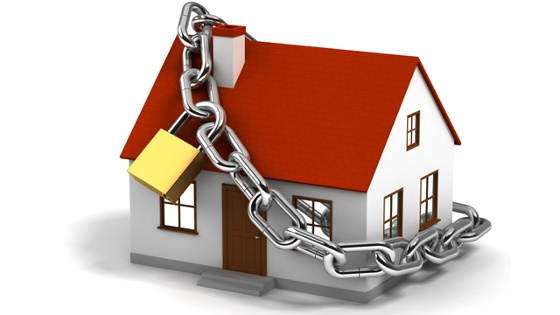
If you’re relaxing on a Caribbean beach, or enjoying a bus tour through historic Paris, the last thing you want to worry about is your home. Most people know the basics of keeping a home secure while away.
 
Here are some additional tips that are easy to miss:
 
• Tell your kids not to boast about your fabulous vacation plans,
especially on social media. The fewer who know that the house will
be empty, the better.
• Ask a neighbour to pick up any mail and flyers dropped at your doorstep. But don’t rely on that alone. Also call the newspaper and
post office to temporarily halt delivery.
• You can buy timers to automatically turn lights on and off. However,
most will stop working if the power goes out and restart with the
incorrect time when the power comes back on. That’s why you
should keep at least a couple of lights turned on continuously, and
not connected to timers.
• If you’re leaving in the evening, or before dawn, don’t forget to open
the blinds. Closed blinds during the day are a dead giveaway that the
owners are away.
 
Finally, experts recommend creating a home security checklist, so you don’tforget anything. That will give you peace of mind.
Read
Reciprocity Logo The data relating to real estate on this website comes in part from the MLS® Reciprocity program of either the Greater Vancouver REALTORS® (GVR), the Fraser Valley Real Estate Board (FVREB) or the Chilliwack and District Real Estate Board (CADREB). Real estate listings held by participating real estate firms are marked with the MLS® logo and detailed information about the listing includes the name of the listing agent. This representation is based in whole or part on data generated by either the GVR, the FVREB or the CADREB which assumes no responsibility for its accuracy. The materials contained on this page may not be reproduced without the express written consent of either the GVR, the FVREB or the CADREB.